

Travel Essentials for South Korea
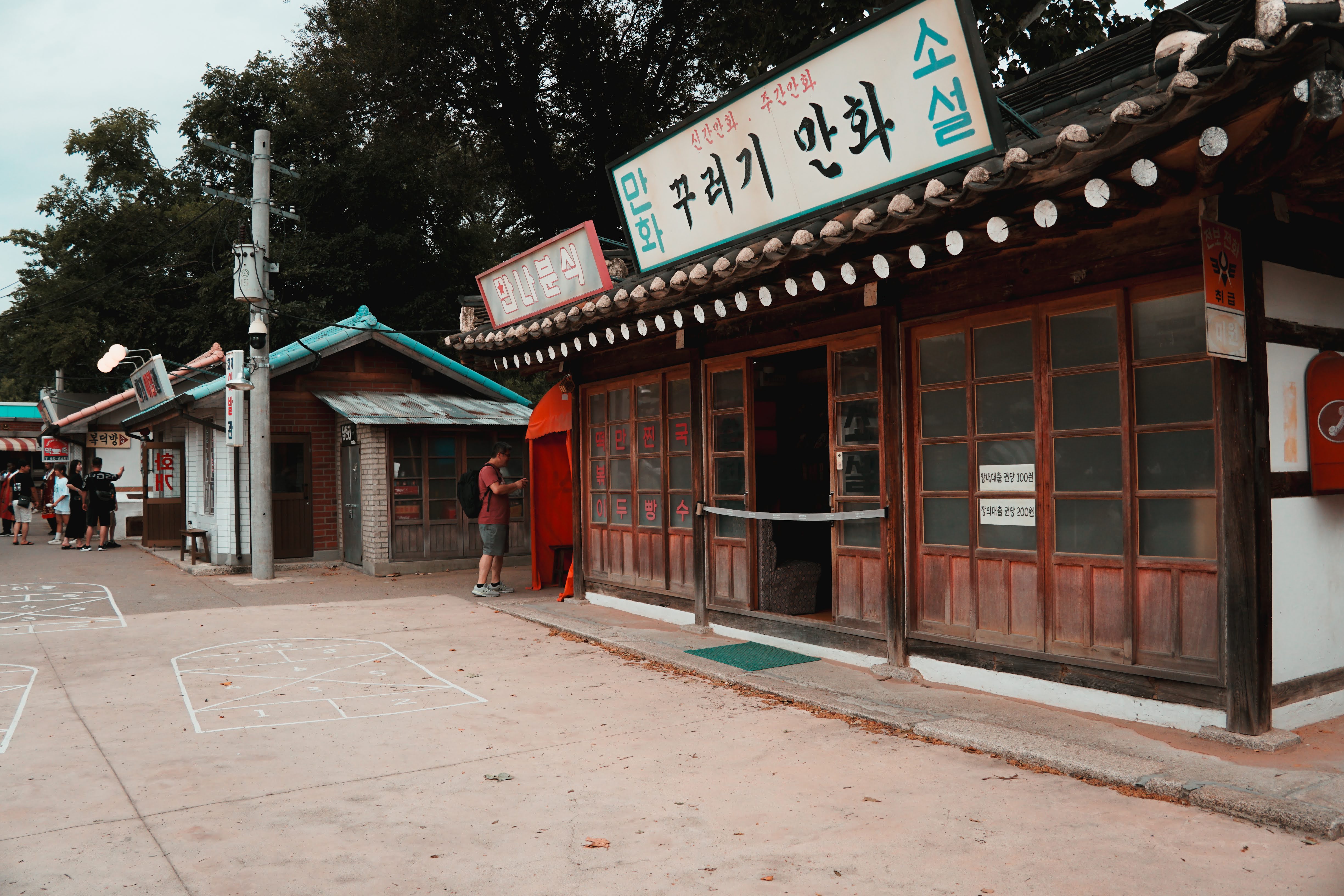
In the past 5 years, South Korea has become one of the premiere travel destinations. Known for its high-tech cities and stunning landscape, Korea has risen to the occasion, offering visitors unique experiences you can’t get anywhere else.
So you’ve decided to go to South Korea for vacation or maybe work and don’t know what to pack? Are you concerned about getting around? Maybe you aren’t sure about what is essential overseas. Here are the top 10 travel must-haves for South Korea, specifically Seoul.
1. A Translator App
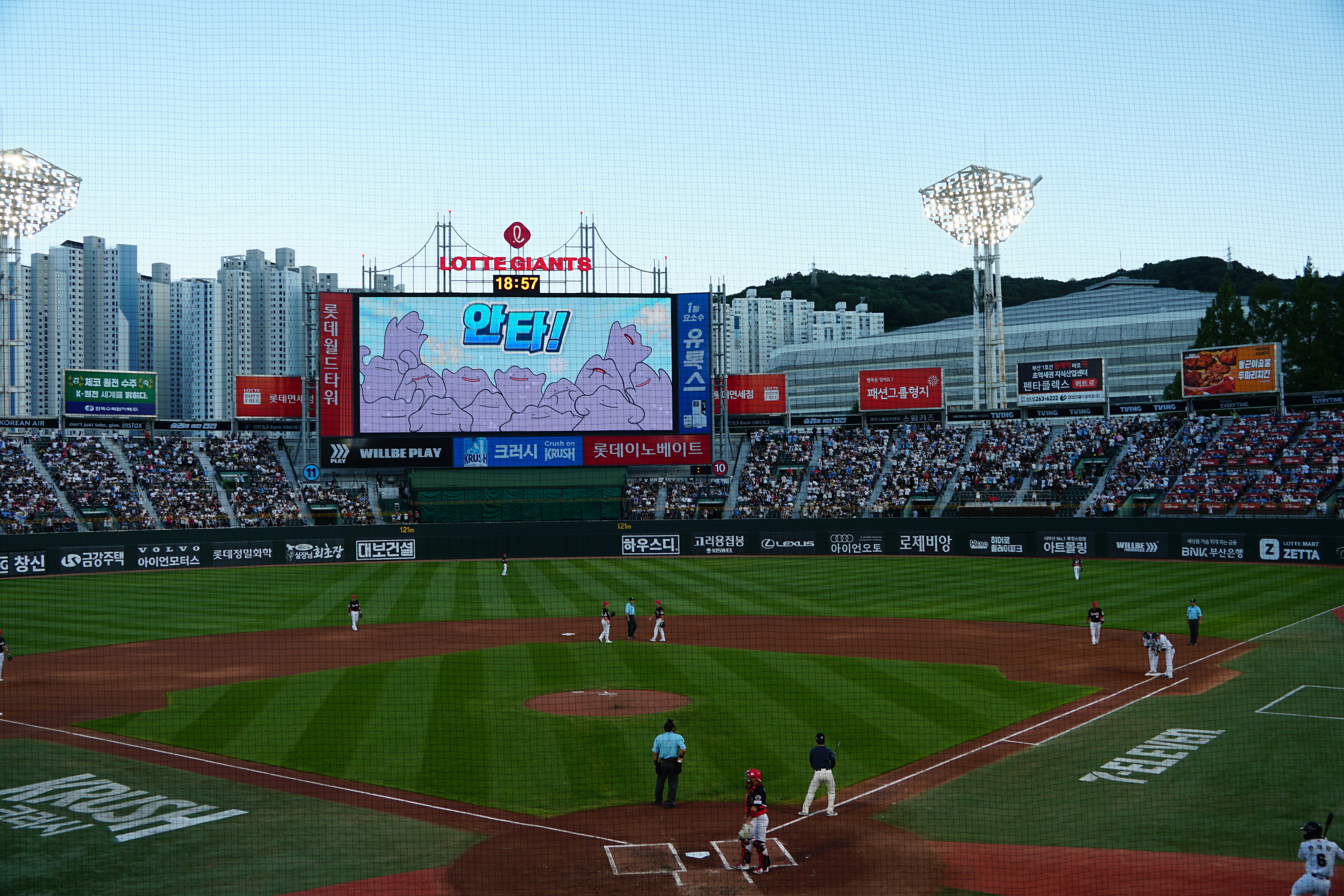
Korean is a difficult language and while the alphabet is relatively easy to learn, there is a learning curve. The best app for translating Korean on the market is the Papago App which works on all forms of Korean including writing, speaking, and live translation. Papago was my saving grace in Korea as while I speak Korean relatively well, I am not fluent.
In my experiences, most Koreans I met did not speak English well enough to communicate with outside of common phrases so an app that does the translating for you is so useful. If I had not had this app I would have missed out on several free events and probably gotten lost a hundred times. This was also the most accurate of the translator apps I tried using while in Seoul, luckily most of the signs and subway announcements were in English, Japanese, Chinese, and Korean.
2. Clothes that cover
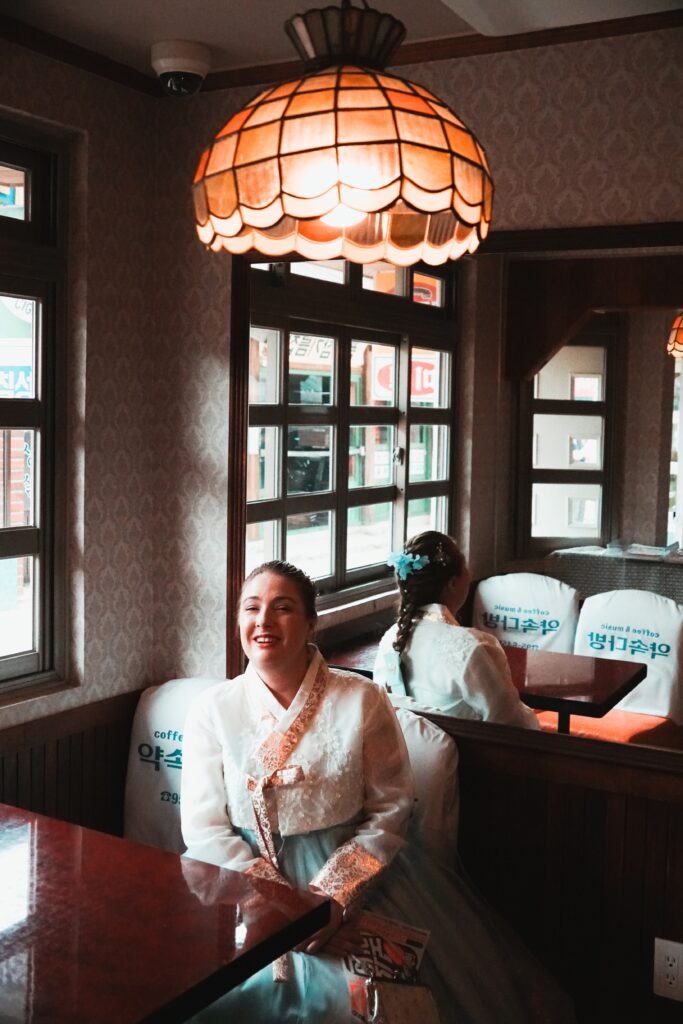
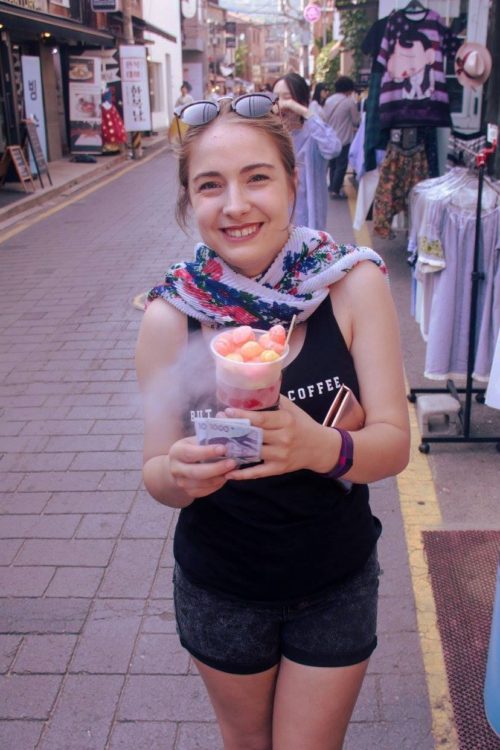
South Korea is still pretty conservative when it comes to clothes. However, societal rules are more so for women than men. Women should not bare their shoulders or show their chest, while most Korean men will not wear tank tops out either. One thing that is interesting is the fact that showing your legs is more acceptable. With this in mind, choosing your clothes should match the same function. You can wear whatever is most comfortable for you.
I prefer to travel light when I travel, often only with a carry on. Nowadays, I travel with enough clothes to fit in a carry on bag but nest it into a larger suitcase so I have twice the amount of space leaving Korea. In the summer, lightweight clothing is a must, not just because it’s easier to pack, but because it is HOT and humid. Often, it was 33-35c/91-95f during the summer with a humidity index of 80% or higher. Lightweight clothing serves 2 functions: less space needed and quicker to dry when wet.
My first trip, I made the mistake of bringing WAY too many clothes, I didn’t even wear everything I brought. The second time, I prioritized versatile clothes that both covered me in a way that was acceptable by Korean standards and were easily packable.. If you don’t have access to a washing/drying unit, use NAVER Maps to search for “세탁소” or “laundromat” and you can easily find coin laundries in the area. They’re often relatively affordable and safe to leave your items.
Crop tops and the like seem to be more or less okay depending on the style. If you’re going in the summer, you’ll definitely want something lightweight as the temperatures rarely cool down and air conditioning is not as widespread. However, a light jacket or scarf may be of use for spaces that utilize air conditioning as it is often low temperatures. Lightweight fabrics like linen or cotton may be the best option for you.
3. Cash
Seoul is frustrating without cash, like more than it should be. Not all ATMs take foreign debit/credit cards and South Korea is called a cash-based economy for a reason. In order to even get on the subway to travel to your accommodations you’ll need to exchange money at the airport, I exchanged $20 USD (literally all the money I had on me when I landed) and could get everything I needed in terms of money for the rest of my trip through ATMs. Most subway stations have global ATMs where you can pull money from a bank account, just make sure that the ATM is labeled correctly.
Most banks have a global ATM available for foreigners, I found that I had the most success with ATMs at Hana or NH Banks. I usually withdrew money in 100,000 KRW increments as that much lasted me a few days before I had to get more and the exchange rate was fixed and not incremental so taking out more was more economical.
Compared to the United States South Korea is much cheaper. For reference, an expensive meal in Seoul was 20,000 KRW – 30,000 (~$14.40 – ~$21.oo) or more per person and a ticket to visit all four Seoul palaces is only 10,000 KRW (~$7.00). Even the subway systems were cheap, for the first 10 km it costs 1,550 KRW (~$1.10), after that they charged an additional 100 KRW per 5 km. Bus prices varied based on the type (between 900-1,550 KRW): yellow, red, green, or blue. Green and yellow being the cheapest, and red the most expensive for intercity travel, routes like Seoul to Suwon. In order to go ANYWHERE in the city, you need a T-money or Climate Card which you can purchase at almost any GS25 or 7-11.
5. T-Money (my preferred), Climate Cards, and Wow Pass
Almost all the transportation besides taxis requires that you refill your transportation card in cash or for those with Climate or WowPass, you can refill on your phone but the payment can sometimes be finicky.
Upon your arrival in Seoul, you can purchase a one time rail pass (return it when you get to your location to get 500 KRW back, yay recycling). T-Money or Climate cards are essential for traveling in or around Seoul You can purchase them in almost every convenience store in Seoul and typically cost around 3-4000 KRW depending on what you purchase, I prefer to buy whichever is most unique so I can easily identify it.
I have a habit of losing my T-Money cards, so I rarely load more than 20,000KRW at a time. This past monthlong trip, I lost 4… yes, 4! Because you have to tap on and off, I thought my pocket was the safest option… it was not.
Most Koreans no long use the physical cards and instead opt for tapping their phones for payment. In the past, this was only an option for those with Korean bank accounts. As of May 2026, foreigners may pay for the subways and busses with tapping, however, there is a credit card fee and foreign transaction fees. I personally plan on staying with the T-Money card as it is what is most familiar to me.
Climate Cards are unlimited transportation cards that have packages for travelers that cover 1, 2, 3, 5, 10+ days of unlimited rides for flat fees. I personally have no experience with these cards as I often was walking more than taking the subway and it didn’t make sense for me personally to use it. However, for those who prefer to move around the city a lot per day, the Climate card is an affordable option with the most expensive 30-day pass being 70,000KRW (~$46.45).
Some Koreans and ex-pats have debit cards that also double as transportation cards. These cards can be used in several ways: you can pay for subway, bus, and taxi fares easily with just a tap, and are refillable at most convenience stores and subway stations.
3. Cash
4. T-Money Card
.
5. Power Converters and Portable Power Banks
Bring one, bring five, just do it. This will save your life when trying to navigate the erratic Seoul streets. Hongdae and Itaewon are literally mazes. I was not the sharpest tool in the shed (is this going to be a copyright issue?) and only had one working power converter. I ended up having to purchase another one when I realized my problem. The good thing is they use the same adapter as Europe, the bad part is you won’t find many power converters, but you can easily find a power block anywhere, except for the one GS25 in Hapjeong station. Try to bring one that has a three-prong hole and one that has a two-prong adapter. My two-prong adapter basically just attached to a US power block and plugged into the wall. My three-prong, however, FAILED ME. I ended up getting an adapter with a USB port from a convenience store to replace my failed adapter. If you can, before your trip, try to find a charging cable that has several charger types from micro-USB, Lightning, et cetera, since these typically allow you to charge over one thing at a time. For example, at any given time, I was charging one or two portable power banks and my cell phone.
If you don’t already own a portable power bank go out and buy one, or seven. I arrived in Seoul with two and left with three. Easily one of the best purchases I’ve ever made, especially as an iPhone owner. My phone’s battery drains quickly and that was excelled by my constant need to use Maps and GPS to get around and translation apps, plus I was also running my Instagram and Facebook (Hey mom and dad I survived) during my downtime. Most decent ones cost maybe $10 in the states and are worth every cent, I cannot stress how many times my phone almost died when I was far from my Airbnb at night and had one of these to charge my phone while I figured out the best route home.
6. A Phone SIM card or WI-FI hotspot
Korean 3G wireless coverage is honestly better than most LTE coverage here in the USA, plus it works in the subways, everywhere. I purchased a 5 GB phone plan through EG SIM card services. It was pricier at 65,000 KRW (Curse you apple for your mini-SIM cards), but well worth it as it didn’t need charging and I was able to connect to private Olleh WI-FI hotspots throughout the city because I had Olleh coverage. In 17 days, with constant internet usage, I ran out of data when I was boarding my plane back to the USA.
While I personally did not use a WI-FI hotspot, my friends did instead of getting a SIM card. For them, it wasn’t feasible as they were only in Seoul for 5 days. Personal WI-FI hotspots range from $50-90 to rent or buy, something I did not want to spend money on at the time since I was getting better coverage through my phone SIM card. These WI-FI hotspots do need to be charged in order to work, so if you’re out all day away from outlets buyer beware.
7. A Reliable Camera
Be it your phone or an actual camera this is essential. You’re abroad in another country and should document your experiences, both good and bad, for the future. I personally travel with a Canon T6s DSLR and my phone, but I do know others who do just as well without the camera. My camera specifically has its own personal WI-FI network that connects to my phone as a shutter control and allowed me to actually download pictures I took from the camera to phone without a computer. There were times when that came in handy, like when there was no one around to help me take the pictures or I just did not want to deal with anyone. I just put my camera on a low wall or gate and snapped away with my shutter hidden behind my back. I wish I had taken more pictures while I was there and it’s something that I really do regret because the country is just amazing.
8. A contact where you’re going
I know meeting people online can be sketchy so you should always be on your guard. However, about five years ago when I was in high school, I did become friends with a Korean high schooler who lived in Seoul through a website called Interpals. He was the first person that I met when I arrived in the country and was the best tour guide I could ask for when it came to the sights. It can be scary going to another country, but it put my parents, who worry like crazy, at ease that I was meeting someone I already knew over there. While this is not a requirement, it can be useful if there’s a language barrier or it’s your first time operating transportation in another country. I did not rely on him for everything, rather we would meet up every so often and go to different locations in the city. If you’re ever headed to Seoul and need someone to show you around send me an email and I’ll put you in contact with my favorite tour guide in Seoul.
9. Kakao apps, ALL of them
Seoul literally runs on these apps. Kakao Talk is how most people communicate, KakaoBus is the go-to bus schedule, and those apps will save your sanity. They even have a taxi service Kakao app that is amazing when you’re in a hurry. It is all in Korean but hey if you can read the alphabet and know the military time it’s not too bad. This is more accurate than Google Maps and also has a feature that shows you how far a bus is from your station in real-time, very useful.
10. Tissues and hand sanitizer
This may seem like the weirdest thing on the list but it is arguably one of the most essential. Not all bathrooms are created equal in Seoul and have toilet paper in them. Tissue packets are vital in this instance as you never know when you’ll need them (Also don’t flush toilet paper it clogs the drain). You can purchase tissues at any convenience store for around 800 KRW if you want the cute ones, and 700 KRW if you want standard ones. The hand sanitizer thing is for all of those moments when you get out of the bathroom and there is no soap or the soap is bar soap, it’s mostly the peace of mind more than anything else.
To learn more about the best things to survive South Korea, including cults, click the buttons below!













Such a beautiful place, l would love to visit. Thanks for sharing